About
I build where technology meets money, risk and human behaviour.
My recurring role has been to turn ambitious ideas into functioning companies by aligning people, capital, product, operations and partnerships.
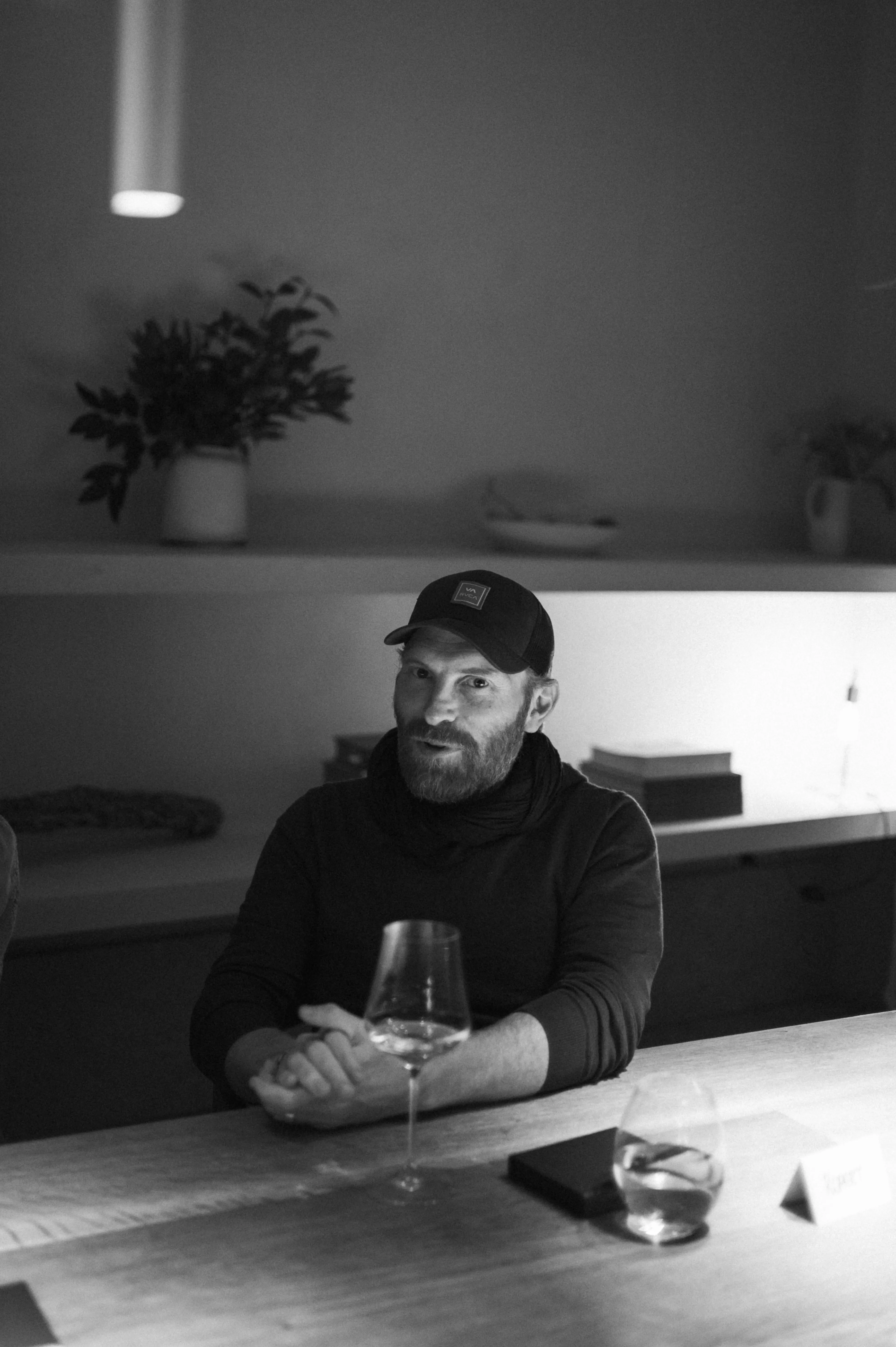
Today
Who I am today.
I am Co-Founder and COO of Centry. We are building a coordinated wealth firm for founders, investors and globally mobile families whose financial lives no longer fit neatly inside one institution, jurisdiction or adviser’s remit.
Centry is my main operating commitment. It is also the clearest expression of the work I have repeatedly done: find the connections between apparently separate problems, bring the right people around them and make sure somebody owns what happens next.
Read why I am building CentryThe beginning
Before fintech, I learned by building in the real world.
I started in music, sound and lighting before moving into live events and corporate experiential work. From there I moved into mobile technology, digital products and agency work, including projects connected to Google’s Android ecosystem.
That first decade taught me how attention is earned, how partnerships are built and how quickly an ambitious idea becomes an operating problem. I later built a digital agency before moving into fintech. The early-career interview is included in the Media record.
The role
The role I tend to play.
I tend to work across departments because the important issue rarely belongs to one of them. A product problem may actually be a positioning problem. A founder disagreement may be a structure or sequencing problem. A wealth decision may look like tax in one meeting, investment in another and family governance in a third.
I am most useful when a room needs somebody to see the whole picture, say the difficult thing clearly and translate it into a decision with an owner.
Pattern recognition only matters if it changes what happens next.
The path
A cumulative career, not a collection of disconnected ventures.
Fintech taught me how people understand money and make investment decisions. Medtech taught me to build where evidence, regulation and outcomes matter. Crypto made new financial infrastructure and new forms of risk tangible. AI raised harder questions about identity, knowledge, provenance and trust.
A Wealth Engineer is accountable for seeing the client’s whole financial picture and coordinating the decisions, structures and specialists around it. Where a matter requires regulated or jurisdiction-specific advice, that advice is delivered by appropriately qualified professionals.
As Co-Founder and COO, my role is to build and coordinate the operating system around that work—across product, people, partnerships, operations and client delivery.
See the career chronologyFailure
Failure is information, if you are honest enough to use it.
Not every company fulfilled its original ambition. Some grew after I stepped back, some changed shape, some continued without me and some eventually ended.
I do not think credibility comes from editing those chapters into a sequence of inevitable wins. It comes from being precise about the role I held, the point at which it changed, what was mine to own and what the experience changed in how I operate.
The lesson I return to is simple: energy and a compelling story can create momentum, but durable companies need disciplined sequencing, clear responsibility and trust earned in detail.
In their words
“For any 1st, 2nd or even 3rd time entrepreneur looking for sage guidance on almost any subject, you’d be lucky to have Rupert Barksfield in your corner. Brilliant, nice and very importantly, humble.”
Outside work
British by background, now based in Portugal.
I live in Cascais with my family. Outside work, I am usually drawn to the same things that occupy me professionally: technology, sport, making things and understanding how systems behave under pressure.
I value directness, curiosity and people who can be serious about the work without taking themselves too seriously.